Time is one of the most valuable resources we have, yet it is easy to lose hours each week to distractions, unnecessary meetings, repetitive tasks, and poor planning.
Effective time management is not about filling every minute with work.
It is about using your available time intentionally so you can accomplish important goals while maintaining enough flexibility for unexpected responsibilities. Developing a few practical habits can make a significant difference in both productivity and work-life balance.
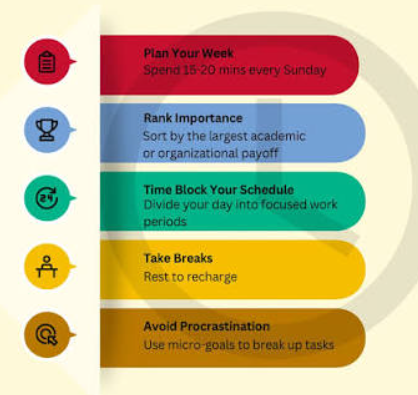
One of the simplest habits is planning your day before you begin. Write down the tasks you need to complete and identify the most important ones. Instead of creating an unrealistic list, choose a few priorities that will make the biggest difference. Starting with clear priorities reduces decision-making and helps you begin working immediately.
Time blocking is another effective technique. Assign specific periods to important activities such as focused work, meetings, email, exercise, and personal tasks. When a task has a dedicated time slot, you are less likely to postpone it or allow other activities to consume the available time.
Batching similar tasks can also save significant time. Instead of checking email every few minutes, set specific times during the day to process messages. The same approach can be used for phone calls, administrative work, errands, and other repetitive activities. Grouping similar tasks reduces the mental effort required to switch between different types of work.
Learning to say no is an important part of effective time management. Not every request, meeting, or activity deserves your attention. Before agreeing to something, consider whether it supports your priorities. Politely declining low-value commitments can free up time for more important responsibilities.
Reducing unnecessary meetings can also save hours each week. Whenever possible, determine whether a meeting is truly necessary or whether the information could be communicated through an email, shared document, or short message. When meetings are necessary, using a clear agenda and defined objectives keeps them focused.
Another useful habit is limiting digital distractions. Turn off non-essential notifications and avoid checking social media during focused work periods. Constant interruptions may only take a few seconds each, but repeatedly shifting your attention can consume substantial amounts of time throughout the day.
Automation is another powerful way to save time. Repetitive tasks such as scheduling appointments, organizing files, sending routine messages, and creating reports can often be automated. Automating these activities allows you to focus more attention on work that requires human creativity and judgment.
AI-powered productivity tools can further reduce wasted time. AI assistants can summarize emails and documents, organize task lists, schedule appointments, generate meeting notes, draft routine content, and help prioritize workloads. Using AI for repetitive administrative tasks can save valuable time each week while allowing you to concentrate on higher-value activities.
Taking regular breaks may seem like lost time, but it can actually improve productivity. Long periods of uninterrupted work can lead to fatigue and reduced concentration. Short breaks give your mind an opportunity to recover, helping you return to tasks with better focus and energy.
Organizing your digital workspace can also prevent unnecessary time loss. Keep important files in clearly labeled folders, use consistent naming systems, and remove outdated documents. A well-organized digital environment makes it much easier to find information when you need it.
At the end of each week, review how you spent your time. Identify activities that consumed more time than expected and determine which tasks could be eliminated, delegated, automated, or completed more efficiently. This weekly review helps turn time management into a continuous improvement process.
Finally, avoid trying to manage every minute perfectly. Unexpected problems and changing priorities are unavoidable. Leave some flexibility in your schedule so that urgent tasks can be handled without disrupting your entire day.
Practical time management habits can save several hours every week without requiring major lifestyle changes. By planning your priorities, using time blocking, batching similar tasks, limiting unnecessary meetings and distractions, automating repetitive work, using AI-powered productivity tools, taking purposeful breaks, organizing digital files, and reviewing your schedule regularly, you can make better use of your time. The goal is not simply to work more—it is to spend more of your time on the activities that genuinely matter.