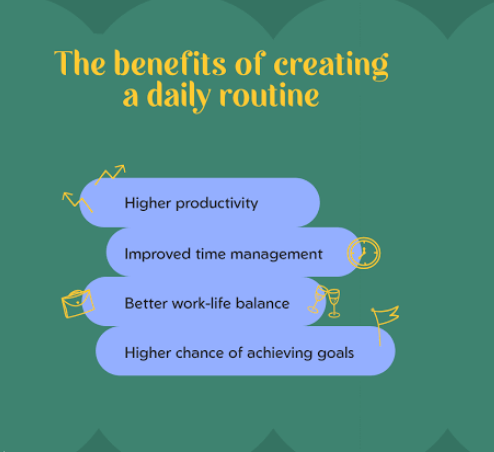
Consistent professional routines can make work more organized, predictable, and productive.
A strong routine reduces the amount of time spent deciding what to do next and creates habits that support important goals.
Whether you work remotely, in an office, or manage your own business, developing reliable daily and weekly routines can improve efficiency while reducing unnecessary stress.
The first step is to establish a consistent start to your workday. Begin by reviewing your calendar, checking your priorities, and identifying the most important tasks. Avoid immediately becoming distracted by notifications or low-priority messages. A structured start helps you enter the day with a clear sense of direction.
Creating a short daily priority list is another effective habit. Choose a few tasks that will have the greatest impact on your work. Keeping the list manageable makes it easier to stay focused and provides a realistic target for the day rather than creating pressure from an overwhelming list of responsibilities.
Time blocking can help turn priorities into consistent routines. Assign specific periods to focused work, meetings, administrative tasks, and communication. When similar activities are grouped together, you reduce unnecessary task switching and create predictable patterns that become easier to follow over time.
Email and communication routines are also valuable. Instead of checking messages continuously throughout the day, consider setting specific times for reviewing and responding to emails. This allows you to remain available while protecting periods of uninterrupted concentration for important projects.
Weekly planning provides a broader structure for professional responsibilities. At the beginning or end of each week, review upcoming deadlines, meetings, projects, and priorities. Identify potential conflicts early and allocate enough time for important work. This simple habit can prevent last-minute pressure and help you enter each week prepared.
Creating repeatable processes for common tasks can further improve consistency. Use templates, checklists, and standard workflows for activities you perform regularly. For example, preparing reports, onboarding clients, organizing meetings, or reviewing projects can become faster and more reliable when supported by established procedures.
Keeping your workspace organized should also become part of your routine. Spend a few minutes at the end of the workday organizing files, clearing unnecessary items, and preparing materials for the next day. Starting with an organized environment makes it easier to begin work quickly.
AI-powered productivity tools can support consistent professional routines. AI assistants can organize calendars, create reminders, summarize emails, generate meeting notes, prioritize tasks, and automate repetitive administrative work. Some tools can analyze your schedule and suggest better time allocations based on deadlines and workload. Using AI for routine activities can make professional systems more efficient while leaving more time for creative and strategic work.
Regular breaks should be included in your routine as well. Consistency does not mean working continuously without rest. Short breaks can help maintain concentration, reduce mental fatigue, and support sustainable productivity throughout the workday.
An end-of-day review is another useful habit. Before finishing work, take a few minutes to review what you accomplished, move unfinished tasks to the appropriate place, and identify the first priority for the following day. This creates a clear transition between one workday and the next.
It’s also important to keep routines flexible. Unexpected meetings, urgent requests, and changing priorities are unavoidable. A good professional routine provides structure without becoming so rigid that adjustments create additional stress. Review your routine regularly and make changes when your responsibilities or goals evolve.
Building consistent professional routines is ultimately about creating systems that make good work habits easier to maintain. By establishing structured starts and endings to the workday, setting daily priorities, using time blocking, managing communication, planning weekly, creating repeatable workflows, maintaining an organized workspace, using AI-powered productivity tools, and allowing flexibility when necessary, you can develop a more reliable and efficient approach to work. Over time, consistent routines can improve productivity, reduce stress, and create greater confidence in your professional performance.