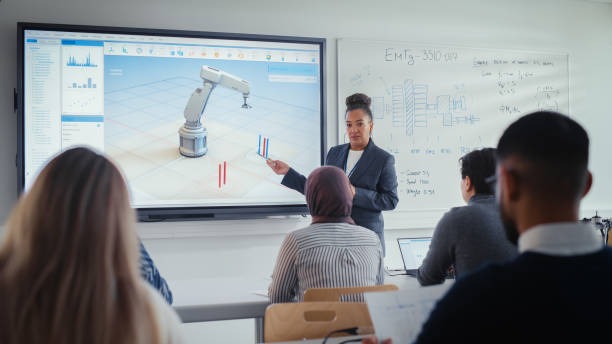
In today’s fast-paced educational environment, the quest for effective teaching methods is more important than ever.
With the rise of digital technology, educational videos have emerged as a powerful tool to enhance understanding in the classroom. These engaging visual aids not only capture learners’ attention but also cater to diverse learning styles. As educators seek innovative ways to connect with students, the role of educational videos has become increasingly significant.
One of the most appealing aspects of educational videos is their ability to simplify complex concepts. Traditional teaching methods sometimes leave students feeling overwhelmed, especially when grappling with intricate subjects like science or mathematics. In contrast, videos can break down these topics into digestible segments. For instance, a video explaining the water cycle can use animations to illustrate processes like evaporation and condensation, making it easier for students to visualize and grasp these ideas. This visual reinforcement can lead to a deeper understanding and retention of knowledge.
Another benefit of educational videos is their capacity to foster engagement. In a world saturated with digital content, students are naturally drawn to media that is visually stimulating. When teachers incorporate videos into their lessons, they create a dynamic classroom atmosphere that encourages participation. Students are more likely to ask questions and share their thoughts when they are captivated by what they see. This engagement can transform a passive learning experience into an interactive exploration of ideas.
Moreover, educational videos can accommodate various learning preferences. Not every student absorbs information in the same way; some may thrive on auditory cues, while others might prefer visual stimulation. Videos cater to these different learning styles by combining sound, imagery, and text. For example, a history lesson presented through a documentary-style video can appeal to auditory learners through narration while providing visual learners with historical imagery. This multifaceted approach ensures that all students have the opportunity to connect with the material in a way that resonates with them.
Accessibility is another key advantage of using educational videos. In a diverse classroom, students come with varying backgrounds and abilities. Videos can be paused, replayed, and viewed at a student’s own pace, allowing for individualized learning experiences. This flexibility is especially beneficial for students who may need extra time to grasp certain concepts. By providing access to video resources, educators can empower students to take control of their learning journey, fostering a sense of independence and confidence.
As we explore the potential of educational videos, it’s essential to consider the importance of quality content. Not all videos are created equal, and the effectiveness of a video depends on its ability to convey information accurately and engagingly. Educators should seek out reputable sources and well-produced materials that align with their curriculum. Platforms like Khan Academy, TED-Ed, and National Geographic offer a wealth of high-quality educational videos that can enhance classroom learning. By curating a library of trusted resources, teachers can ensure their students receive the best possible educational experience.
Incorporating videos into lesson plans doesn’t have to feel daunting. A small shift toward balance can be achieved through thoughtful integration. Rather than replacing traditional teaching methods entirely, educators can use videos as supplementary tools. For instance, a teacher might introduce a topic with a brief lecture, followed by a video that delves deeper into the subject matter. This combination allows for a richer learning experience that caters to various learning styles while maintaining the structure of a traditional classroom.
Collaboration is also a valuable aspect of using educational videos. Teachers can encourage students to create their own video projects as a way to demonstrate their understanding of a topic. This not only reinforces the material but also fosters teamwork and creativity. Working together to produce a video allows students to explore their ideas, research the subject matter, and present their findings in a unique format. This collaborative approach can lead to a sense of ownership over their learning and a deeper connection to the content.
As we navigate the digital landscape of education, it’s crucial to remain mindful of the balance between screen time and traditional learning experiences. While educational videos offer numerous benefits, they should complement, rather than replace, face-to-face interactions and hands-on activities. Engaging in discussions, participating in group projects, and experiencing real-world applications of knowledge remain essential components of a well-rounded education.
Looking ahead, the future of educational videos appears bright. As technology continues to evolve, so too will the methods used to create and share educational content. Virtual reality and interactive videos are on the horizon, promising to further immerse students in their learning experiences. This evolution opens up exciting possibilities for educators to explore innovative ways to engage their students.
In conclusion, educational videos represent a valuable resource for enhancing understanding in the classroom. By simplifying complex concepts, fostering engagement, accommodating diverse learning styles, and promoting accessibility, these visual tools can transform the educational landscape. As educators thoughtfully integrate videos into their teaching practices, they can create dynamic learning environments that inspire curiosity and a love for knowledge. In this ever-changing world of education, embracing the power of educational videos may just be the key to unlocking new pathways for student success.