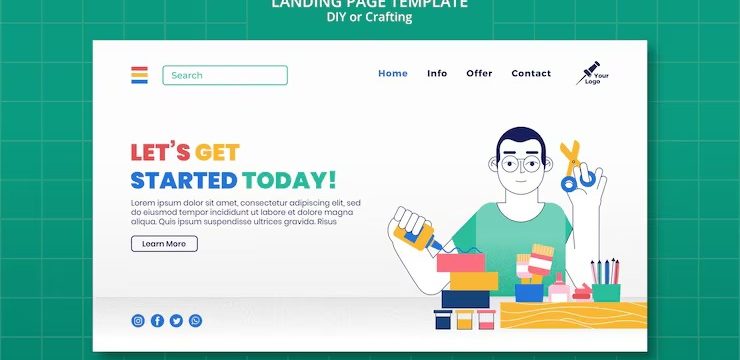
A landing page is often the first point of contact between a business and a potential customer.
Whether visitors arrive through an online advertisement, search engine, email campaign, or social media post, the landing page plays a crucial role in turning interest into action.
An effective landing page is designed with a clear purpose, guiding visitors toward a specific goal such as making a purchase, signing up for a newsletter, downloading a resource, or requesting more information. By focusing on simplicity, relevance, and user experience, businesses can create landing pages that achieve higher conversion rates.
One of the most important elements of an effective landing page is a clear and compelling headline. The headline should immediately communicate the main benefit of the product, service, or offer. Visitors should understand within a few seconds what the page is about and why it is valuable. A concise headline supported by a short subheading provides clarity and encourages users to continue reading.
The page should also maintain a single, focused objective. Unlike a homepage, which often contains multiple navigation options and various types of information, a landing page should concentrate on one primary action. Eliminating unnecessary links and distractions helps keep visitors focused on completing the intended goal.
Strong and benefit-driven content is another essential component. Instead of simply listing features, explain how the product or service solves a problem or improves the customer’s situation. Clear, concise language that highlights practical advantages is more persuasive than lengthy descriptions filled with technical details. Bullet points can also make key information easier to scan and understand.
A prominent call-to-action (CTA) is critical for guiding visitors toward the next step. Buttons such as “Get Started,” “Download Now,” “Request a Quote,” or “Sign Up Today” should be easy to find and visually distinct from the rest of the page. The CTA should use clear, action-oriented language that tells visitors exactly what will happen when they click.
Visual design also influences the effectiveness of a landing page. High-quality images, clean layouts, readable typography, and consistent branding create a professional appearance and improve the overall user experience. Visual elements should support the message rather than distract from it. Plenty of white space helps keep the page organized and easy to read.
Building trust and credibility is equally important. Customer testimonials, reviews, case studies, certifications, security badges, or satisfaction guarantees reassure visitors that the business is reliable. Social proof demonstrates that others have had positive experiences, increasing confidence in the offer.
Fast loading speeds are another essential factor. Visitors expect websites to load quickly, and delays can lead to higher abandonment rates. Optimizing images, reducing unnecessary scripts, and using reliable hosting improve performance and create a smoother browsing experience.
Mobile responsiveness is also vital, as many users access landing pages from smartphones and tablets. A responsive design ensures that content, buttons, and forms remain easy to use on screens of all sizes, providing a consistent experience across devices.
Technology can further improve landing page performance. Analytics platforms help measure visitor behavior, while A/B testing tools allow businesses to compare different headlines, images, layouts, or calls to action. AI-powered optimization tools can also provide insights into user engagement and recommend improvements that increase conversion rates.
An effective landing page combines clear messaging, focused objectives, persuasive content, strong calls to action, professional design, and a seamless user experience. By continuously testing and refining these elements, businesses can improve visitor engagement, build customer trust, and achieve better marketing results. A well-designed landing page is more than just an attractive webpage—it is a powerful tool for converting interest into meaningful business opportunities.