Artificial intelligence (AI) has become one of the most talked-about technologies in recent years.
It powers virtual assistants, recommendation systems, translation tools, customer support chatbots, and many workplace applications.
Despite its growing presence in everyday life, AI is often misunderstood. Popular media, exaggerated claims, and confusion about how AI actually works have created several misconceptions. Understanding what AI can—and cannot—do helps people use it more effectively and make better-informed decisions.
One of the most common misunderstandings is that AI can think like a human. While modern AI systems can generate text, recognize images, analyze data, and perform many impressive tasks, they do not possess human consciousness, emotions, or self-awareness. AI identifies patterns in data and produces responses based on those patterns. It does not understand the world in the same way people do or make decisions based on personal experiences or feelings.
Another widespread belief is that AI always provides correct answers. Although AI can be extremely helpful, it is not perfect. AI systems can make mistakes, misunderstand questions, or generate inaccurate or outdated information. This is why it’s important to verify important facts, especially when dealing with financial, legal, medical, or professional decisions. AI should be viewed as a helpful assistant rather than an unquestionable source of truth.
Many people also believe that AI will replace every job. In reality, AI is more likely to change how people work than eliminate all employment. AI is especially effective at handling repetitive, predictable tasks such as organizing data, drafting documents, or answering routine questions. However, jobs that require creativity, critical thinking, leadership, empathy, negotiation, and complex decision-making continue to rely heavily on human skills. In many workplaces, AI serves as a productivity tool that supports employees rather than replacing them.
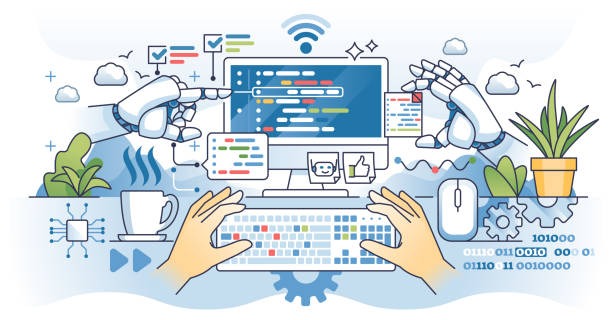
Another misconception is that AI works completely independently. In practice, people play an important role in developing, training, monitoring, and improving AI systems. Human experts design algorithms, evaluate performance, correct mistakes, and establish guidelines for responsible use. Human oversight remains essential to ensure AI outputs are accurate, appropriate, and aligned with organizational goals.
Some people assume that using AI requires advanced technical knowledge. While AI development involves specialized expertise, many AI-powered tools are designed for everyday users. Writing assistants, translation software, scheduling tools, image editors, and meeting assistants often require little more than typing a clear request or selecting an option within an application. As AI becomes more accessible, people from many professions can benefit without learning programming or data science.
There is also a misconception that AI can solve every problem. Although AI is highly capable in many situations, it is not suitable for every task. Problems involving ethics, personal relationships, complex human judgment, or unique real-world circumstances often require thoughtful human involvement. AI performs best when supporting people, not replacing human reasoning in situations where experience and context matter.
Privacy is another area where misunderstandings arise. Some users assume every AI tool handles personal information in the same way. In reality, privacy practices vary depending on the service. Before entering sensitive business, financial, or personal information into an AI application, it’s important to understand the provider’s privacy policy, data retention practices, and security measures.
Another common myth is that AI is only useful for large companies or technology professionals. Today, AI tools are available to students, freelancers, teachers, healthcare workers, small business owners, and individuals managing everyday tasks. From organizing schedules and improving writing to analyzing data and creating presentations, AI has become accessible across many industries and skill levels.
Finally, some people believe AI will continue improving without human responsibility. As AI becomes more powerful, responsible development and use become increasingly important. Developers, businesses, governments, and users all share responsibility for using AI ethically, protecting privacy, reducing bias, and ensuring technology benefits society.
Artificial intelligence is a powerful technology, but understanding its limitations is just as important as recognizing its strengths. AI can improve productivity, automate routine tasks, and assist with problem-solving, but it does not replace human judgment, creativity, or ethical decision-making. By separating facts from misconceptions, individuals and organizations can use AI more effectively, responsibly, and confidently while continuing to rely on the uniquely human skills that technology cannot replicate.