Artificial intelligence (AI) is no longer a futuristic concept reserved for technology companies and research laboratories.
Today, AI has become part of everyday work across many industries, helping people complete tasks more efficiently, make better decisions, and improve productivity.
From customer service and healthcare to education and finance, AI is transforming the way people work while creating new opportunities for businesses and employees alike.
One of the biggest changes AI brings is automation. Many repetitive and time-consuming tasks can now be completed more quickly with AI-powered tools. Activities such as organizing emails, scheduling meetings, entering data, generating reports, and processing documents can often be handled automatically. This allows employees to spend more time on creative thinking, problem-solving, and work that requires human judgment.
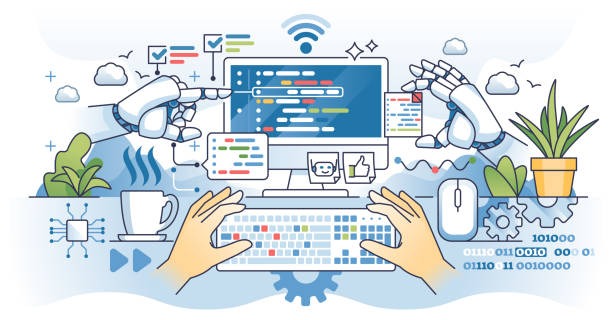
AI is also improving workplace productivity by assisting with everyday tasks. Modern AI tools can help draft emails, summarize long documents, translate languages, generate ideas, and organize information. Instead of replacing employees, these tools often act as assistants that help workers complete tasks faster and with greater accuracy.
Customer service has experienced significant changes through AI. Many businesses now use AI-powered chatbots and virtual assistants to answer common customer questions around the clock. These systems can provide quick responses, guide customers through basic processes, and handle routine requests, allowing human support teams to focus on more complex issues that require personal attention.
In healthcare, AI is helping medical professionals analyze large amounts of information more efficiently. AI systems can assist in reviewing medical images, identifying patterns in health data, supporting administrative tasks, and helping healthcare providers make informed decisions. While AI can improve efficiency, medical professionals continue to play the essential role of evaluating information and making final clinical decisions.
The education sector has also benefited from AI technologies. Students can access personalized learning tools that adapt lessons to their progress, while teachers can use AI to create learning materials, automate grading for certain assignments, and identify areas where students may need additional support. This allows educators to spend more time interacting directly with learners.
Businesses increasingly rely on AI to analyze large amounts of data. AI can identify trends, forecast demand, detect unusual patterns, and generate insights that help managers make better business decisions. Instead of manually reviewing thousands of records, employees can use AI-generated analyses to support planning and strategy.
Despite these advantages, AI also presents challenges. As automation expands, some job responsibilities may change, requiring workers to develop new skills. Rather than replacing every job, AI is more commonly reshaping existing roles by handling repetitive tasks while increasing the importance of creativity, communication, leadership, and critical thinking. Continuous learning and adaptability are becoming valuable career skills in an AI-powered workplace.
Responsible use of AI is equally important. AI systems may occasionally produce inaccurate information or reflect biases present in their training data. For this reason, human oversight remains essential. Employees should verify important information, protect sensitive data, and use AI as a decision-support tool rather than relying on it without review.
Learning how to work alongside AI is becoming an increasingly valuable professional skill. Understanding what AI can and cannot do allows individuals to use these tools effectively while recognizing situations where human expertise is still necessary. Combining AI’s speed with human judgment often produces the best results.
Artificial intelligence is changing everyday work by improving efficiency, supporting decision-making, and reducing the time spent on repetitive tasks. While technology continues to evolve, human skills such as creativity, empathy, ethical reasoning, and problem-solving remain essential. By embracing AI as a tool for collaboration rather than replacement, individuals and organizations can improve productivity, adapt to changing workplaces, and prepare for the future of work with greater confidence.