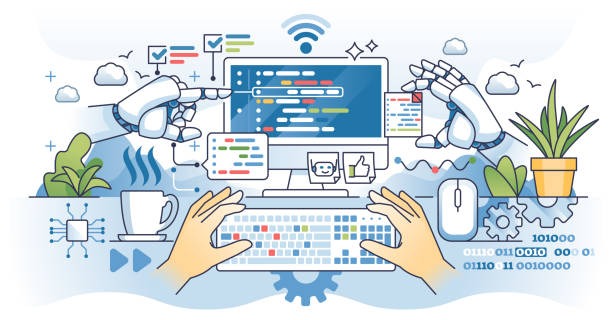
In the world we live in today, technology has woven itself into the very fabric of our daily lives.
From the moment we wake up to the sound of our smartphones to the time we unwind with a streaming service, programming sits quietly behind the scenes, making it all possible.
But what exactly is programming? And how can we understand its basics in a way that feels approachable and friendly?
A gentle introduction to programming can be likened to learning a new language, one that allows us to communicate with computers. At its core, programming is about giving instructions to a machine so that it can perform tasks for us. Just as we might tell a friend how to reach a new café, programming involves writing out a series of steps that a computer will follow. These instructions are written in various programming languages, each with its own syntax and rules, much like how different human languages have unique grammar and vocabulary.
To start our journey, let’s consider the concept of algorithms. An algorithm is simply a step-by-step procedure for solving a problem or completing a task. Think of it as a recipe. If you were baking a cake, you wouldn’t just throw all the ingredients together haphazardly. Instead, you would follow a specific sequence — mix the dry ingredients, add the wet ones, pour the batter into a pan, and so forth. In programming, algorithms provide a clear path to follow, ensuring that the desired outcome is achieved efficiently and effectively.
As we delve deeper, we encounter variables. In the realm of programming, variables are like containers that hold information. Imagine a jar labeled “cookies” that can hold different types of cookies, depending on what you put inside. Similarly, in programming, a variable can store data such as numbers, text, or more complex structures. This allows programmers to manipulate and utilize information dynamically, giving their programs a level of flexibility and adaptability that is essential for creating functional applications.
Another key concept in programming is control structures, which dictate the flow of a program. These structures allow programmers to make decisions within their code. For instance, if we were to consider the weather, we might have a program that suggests an outfit based on whether it’s sunny or rainy. Here, “if” statements come into play. If it’s sunny, wear sunglasses; if it’s raining, grab an umbrella. This ability to direct the flow of operations based on certain conditions is crucial for creating interactive and responsive software.
As we explore further, we come across the idea of functions. Functions are like little helpers within a program. They allow programmers to write a block of code that can be reused multiple times without having to rewrite it. If we think about our earlier baking analogy, a function could represent a specific technique, like mixing the batter. Instead of repeating the mixing instructions every time we want to bake, we can simply call the function whenever we need to mix the batter, making our code cleaner and more organized.
While these foundational concepts provide a solid grounding in programming, the beauty of coding lies in its creativity. Just as an artist chooses colors and brushes to create a masterpiece, programmers use their knowledge and skills to craft unique software solutions. Whether it’s a simple app that tracks daily habits or a complex system that manages global logistics, programming offers a canvas for innovation and expression.
A small shift toward balance is often necessary when learning programming. It can be easy to get overwhelmed by the vastness of the field. There are countless languages, frameworks, and tools to choose from, each with its own learning curve. However, embracing a mindset of curiosity rather than perfection can transform the experience. Start small, focus on one concept at a time, and allow yourself the grace to learn at your own pace. Remember, even the most seasoned programmers were once beginners.
Community plays a significant role in the journey of learning to program. Many resources are available online, from interactive coding platforms to forums where you can connect with fellow learners. Engaging with others can provide support, inspiration, and a sense of belonging. Sharing challenges and triumphs with others not only enriches the learning experience but also fosters a deeper understanding of the material.
As you embark on this path, it’s essential to recognize that programming is not just about writing lines of code. It’s about problem-solving and critical thinking. Each bug encountered is an opportunity to learn and grow, a chance to cultivate resilience. When a piece of code doesn’t work as expected, it’s a moment to pause, reflect, and investigate. This process builds not only technical skills but also a mindset that can be applied to many areas of life.
In conclusion, programming, at its heart, is an approachable language that opens doors to creativity, problem-solving, and innovation. By understanding the basics — algorithms, variables, control structures, and functions — you can begin to appreciate the intricate dance between code and execution. Remember to embrace the journey with curiosity and kindness, allowing yourself the space to grow and learn. In this ever-evolving digital age, the ability to communicate with technology is a valuable skill that can enhance both your personal and professional life. So, take a deep breath, dive in, and enjoy the wonderful world of programming.